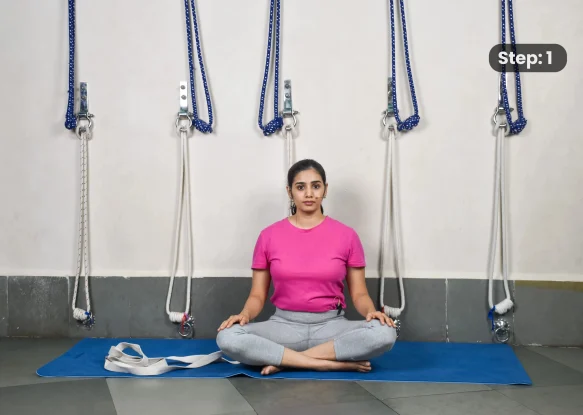
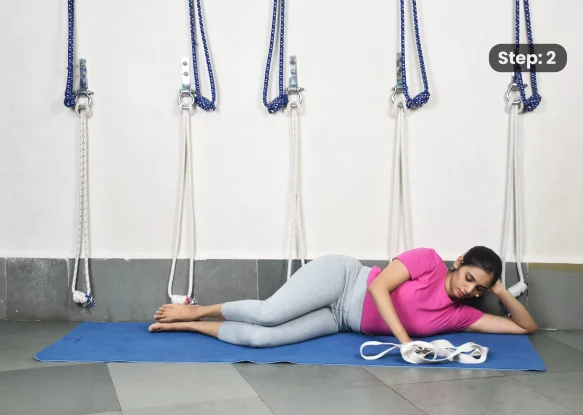
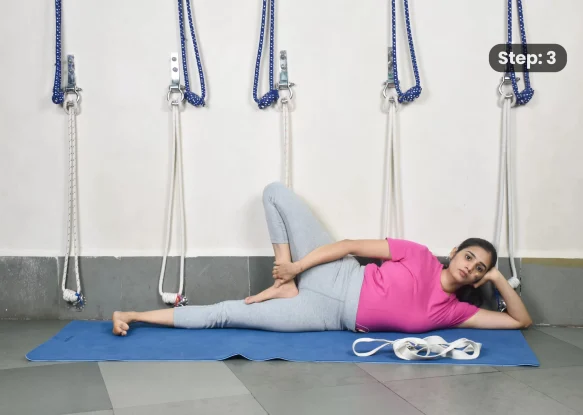
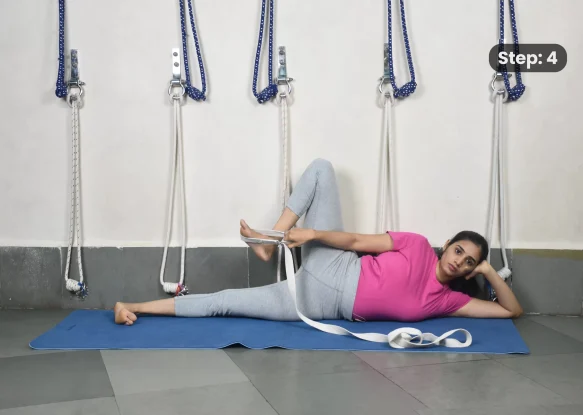
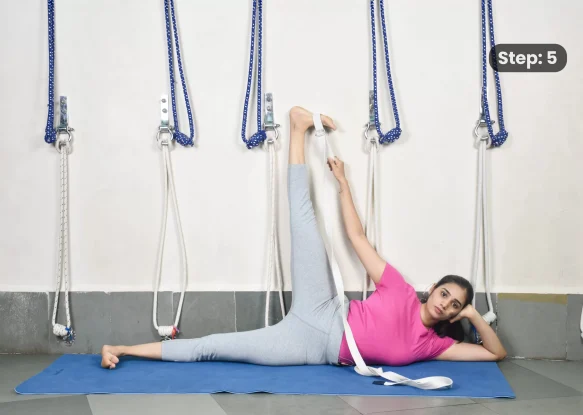
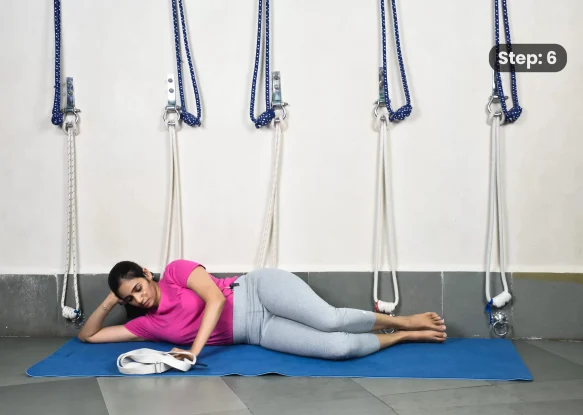
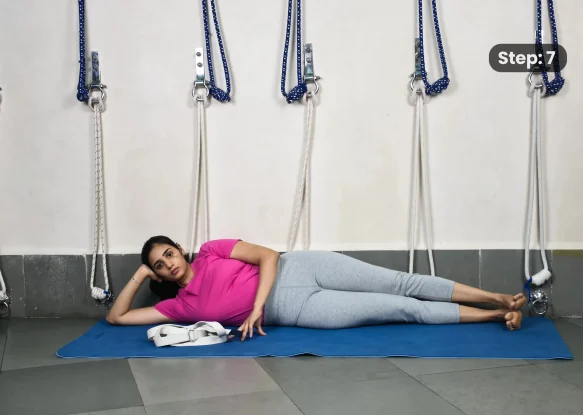
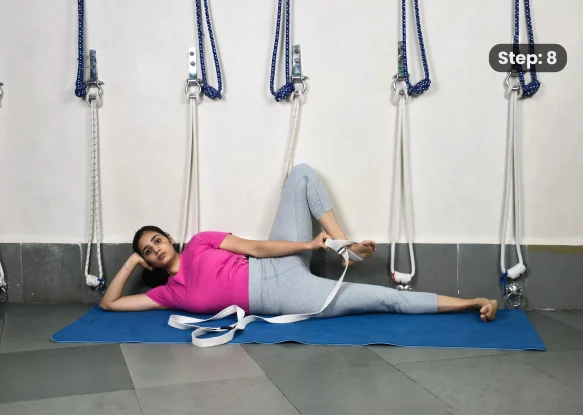
The name comes from the Sanskrit words anantā (अनन्त) meaning “the infinite one” and āsana (आसन) meaning “posture” or “seat”.
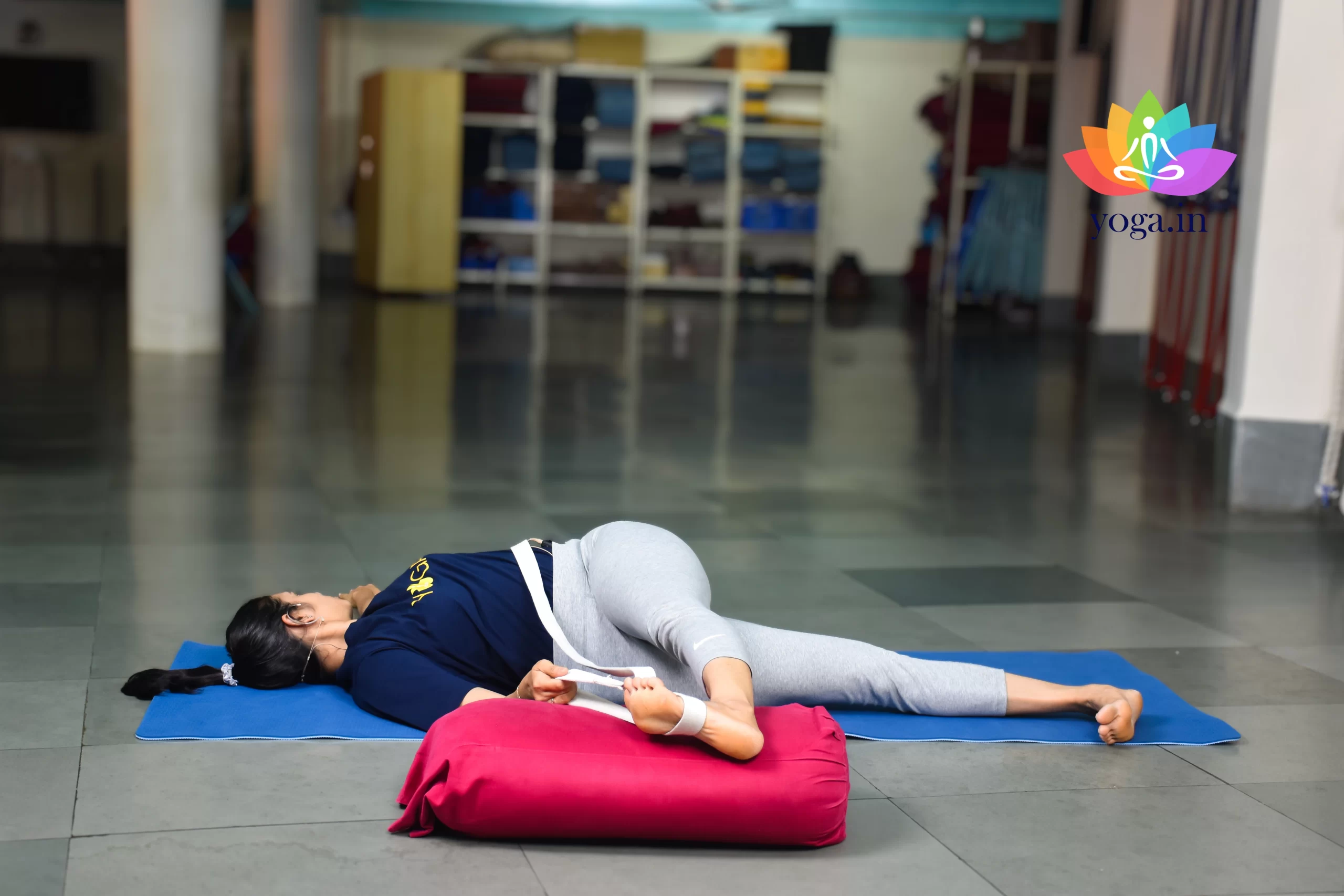
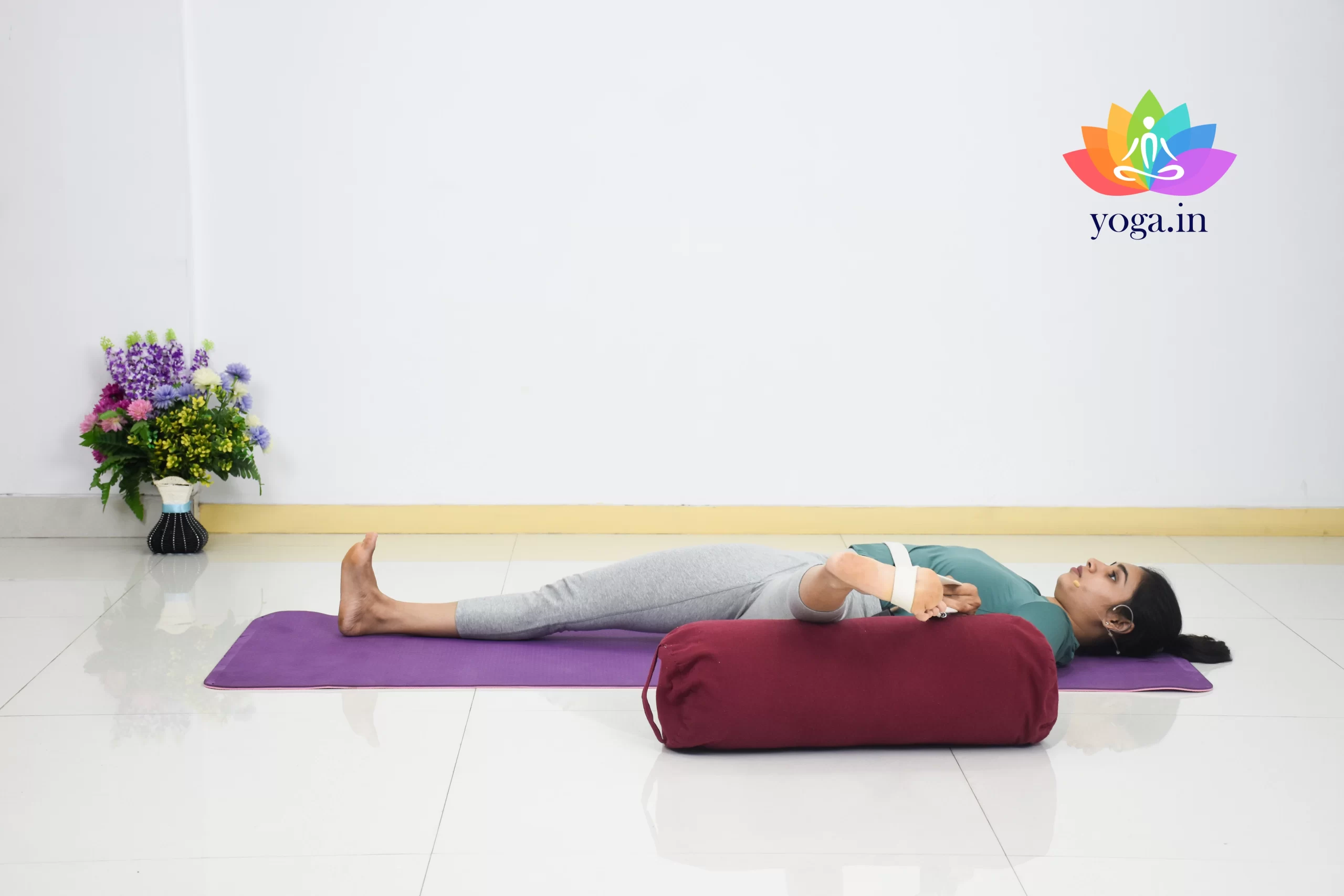
Steps to perform the Asana: Anantasana (Therapy)
Start by placing a yoga mat against a wall. Sit on the mat with your back facing the wall.
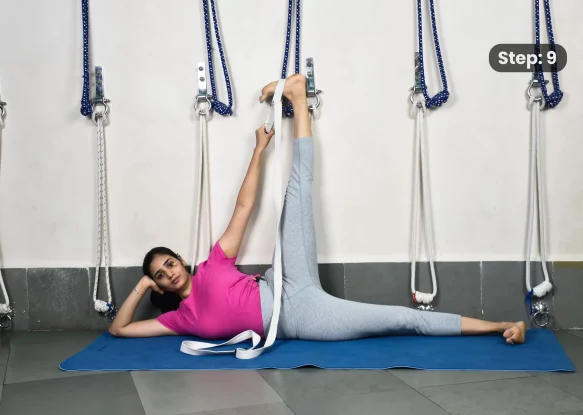
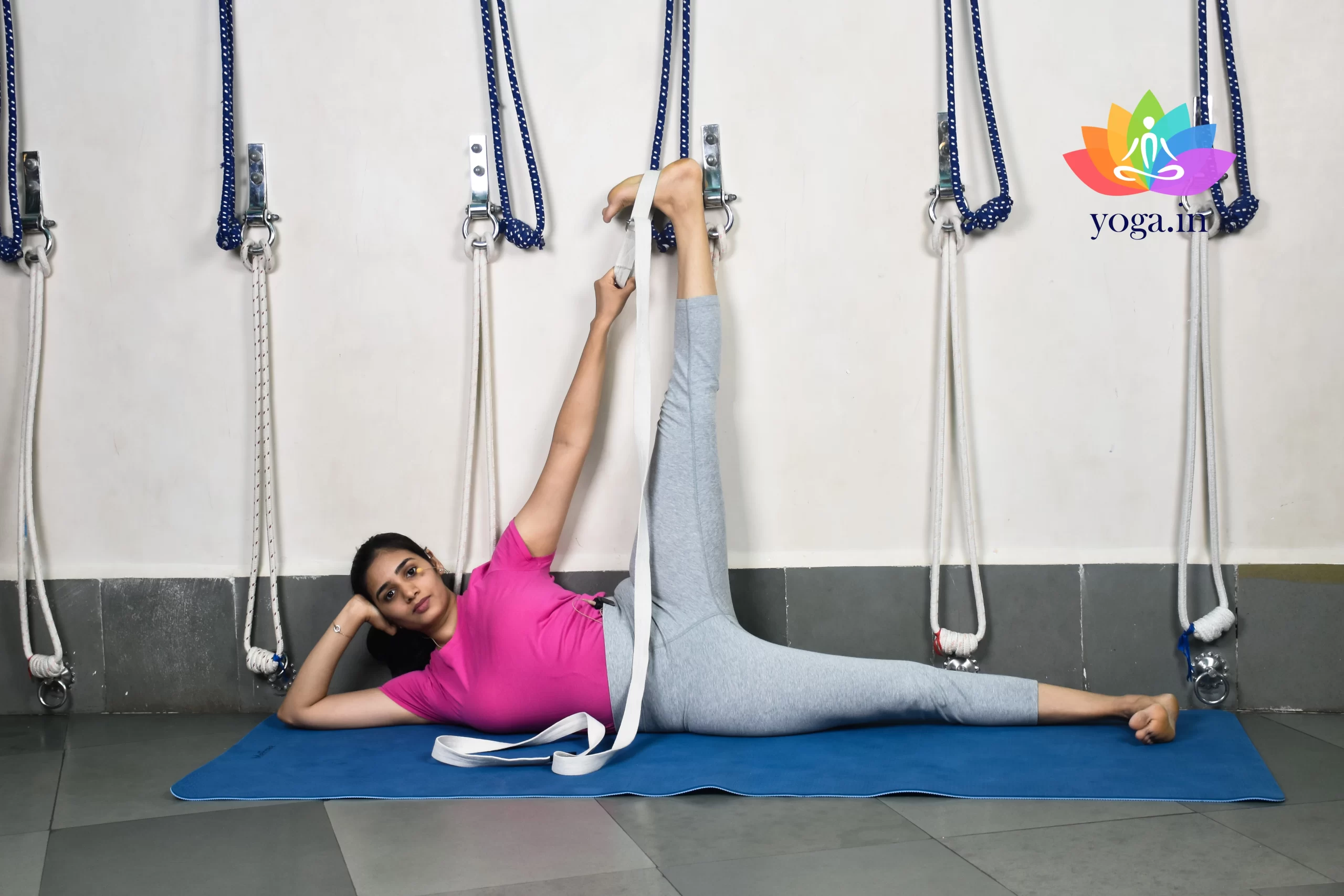
Lie down on your one side. Extend your legs along the wall. Your hips, spine, and head should be in a straight line.
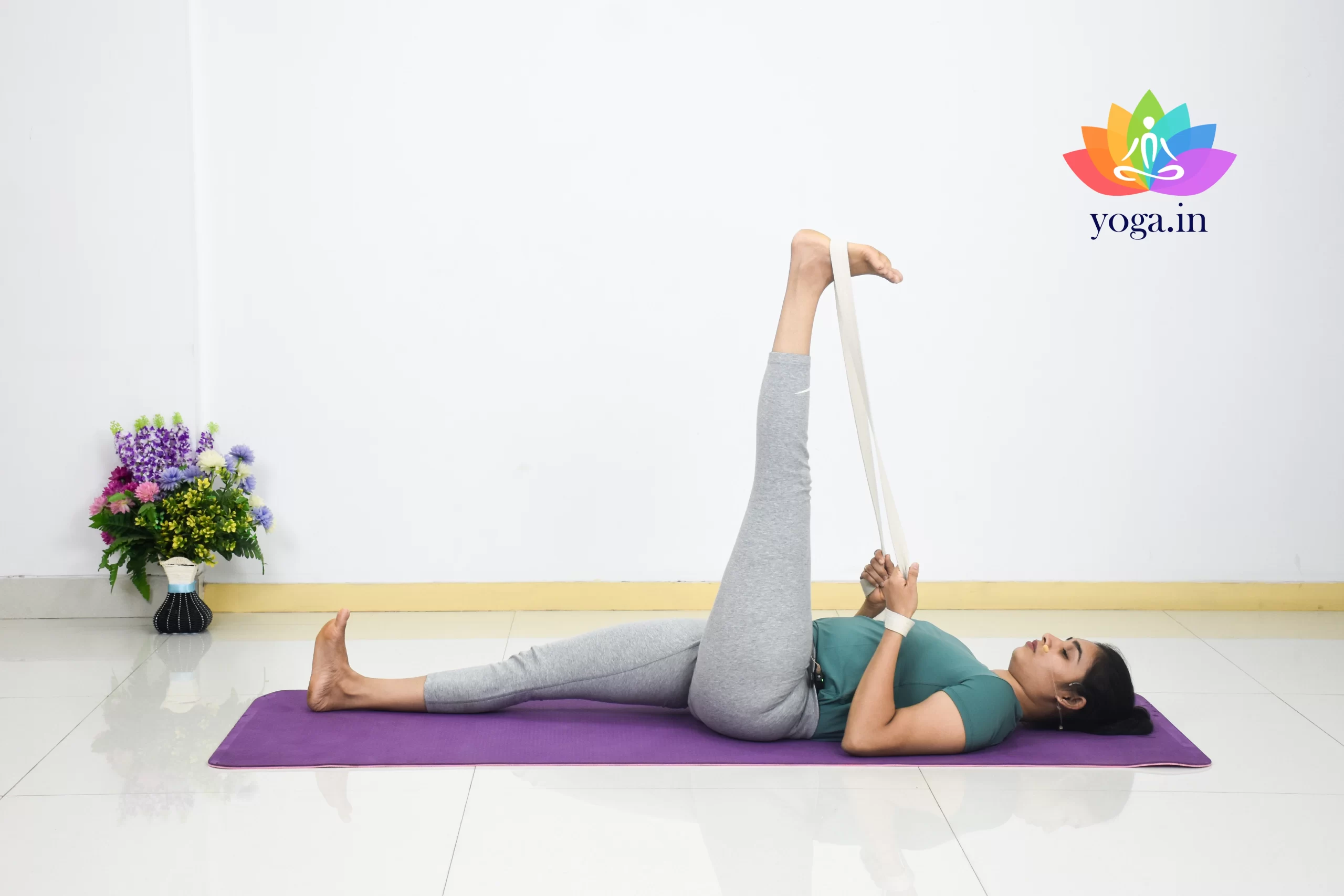
Loop a yoga belt or strap around your top foot. Hold the ends of the belt with your top hand.
Engage your core muscles by drawing your navel toward your spine. This will help stabilize your torso and maintain balance.
Inhale and slowly lift your top leg up, keeping it straight. Use the support of the belt to help you maintain the leg’s position.
Ensure that your hips are stacked, and your top shoulder is directly above your bottom shoulder. Your extended leg should be in line with your torso by flexing the foot towards you.
Hold the pose for several breaths, focusing on maintaining alignment and stability. Keep your gaze steady and your neck in line with your spine.
Exhale and gently lower your leg back down to the starting position.
Repeat the pose on the other side, switching the belt to your other foot and adjusting your position accordingly.
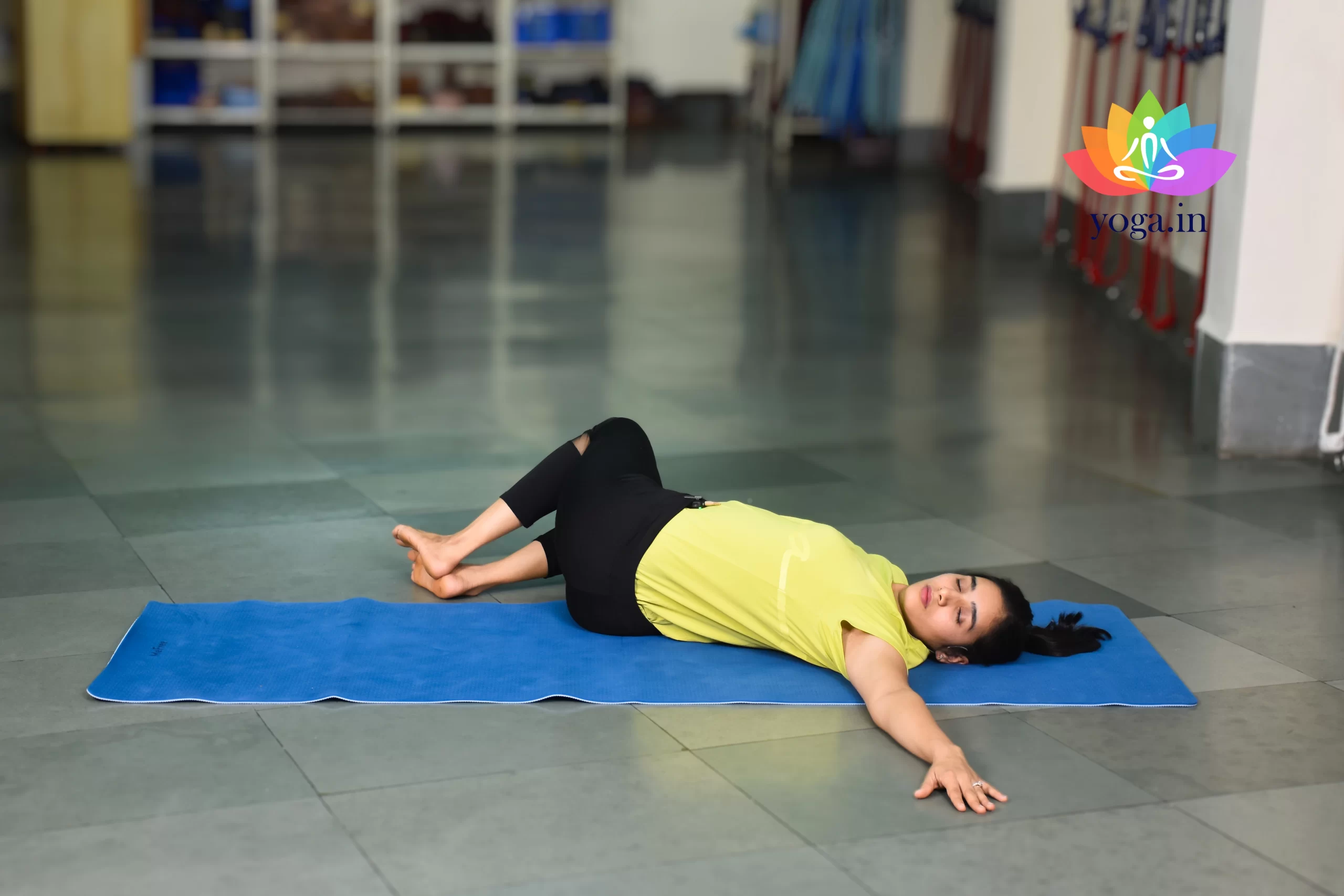
After completing the pose on both sides, take a moment to rest in a comfortable position, such as lying on your back.
Slowly turn towards right side and by taking the support of your hand come up and sit in Sukhasana.
Key Alignment Points
Ensure that your bottom hip is directly under your top hip. This alignment is crucial for stability and proper engagement of the core muscles.
Engage your core muscles by drawing navel helps to support your lower back and maintain stability in the pose.
Flex your foot to engage the leg muscles and maintain active alignment.
Common Misalignments / (Mistakes)
One common issue is the hips not being stacked properly
Avoid letting the shoulder collapse forward or backward
Avoid letting your belly sag or protrude outward
Avoid craning the neck upward or letting it collapse downward
Contraindication / Cautions
Avoid this pose in any kind of Knees & shoulders injury
Avoid in case of any surgery
Avoid during pregnancy or in high blood pressure
Avoid in case of herniated discs or spondylolisthesis