Pawanmuktasana (Pawanmuktasana — Wind Relieving Pose )

Sanskrit: पवनमुक्तासन) ·  Pronunciation: pah-van-mook-TAH-sah-nah  ·  Chakras: Muladhara, Svadhisthana, Manipura

This page is your complete guide to Pawanmuktasana (Wind Relieving Pose) — a supine asana that purifies Apana Vayu, relieves trapped gas and bloating, and forms the heart of the Bihar School’s celebrated Pawanmuktasana Series. Learn its three-word Sanskrit origin, Swami Satyananda’s codification, step-by-step technique for both single and double-leg forms, all variations, therapeutic benefits, and who must avoid this pose. 

Overview

What Is Pawanmuktasana ?

Pawanmuktasana is a supine wind-relieving posture composed of three Sanskrit words — Pawan (wind / Apana Vayu), Mukta (liberation), and Asana (posture). The pose draws one or both knees to the chest, compresses the abdomen, and mechanically releases trapped gas from the intestines. While absent from medieval Hatha yoga texts, it was codified and popularised globally by Swami Satyananda Saraswati of the Bihar School of Yoga as part of his foundational Pawanmuktasana Series — one of yoga’s most important therapeutic sequences. 

Sanskrit Name
Pawanmuktasana (पवनमुक्तासन)
Meaning
Wind Liberation
Pose Type
Supine, Restorative, Therapeutic
Strengthens
Core, Lower Back, Hips
Also Known As
Wind Relieving Pose, Gas Release Pose, Apanasana
Chakras Activated
Muladhara, Svadhisthana, Manipura
Stretches
Lower Back, Hips, Glutes, Neck
Pronunciation
pah-van-mook-TAH-sah-nah
Warm Up First

Preparatory Poses

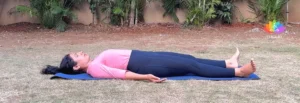
Banner Savasana
Savasana (Corpse Pose)

The resting base before entering Pawanmuktasana.

Banner Tadasana
Tadasana (Mountain Pose)

Supine Mountain — aligns the body before the knees draw in.

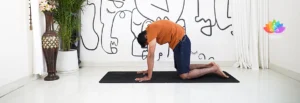
Banner Marjariasana
Marjariasana

Warms the spine before any supine hip-compression work.

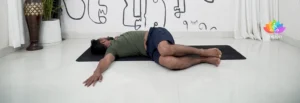
Banner Jathara Parivartanasana
Jathara Parivartanasana (The Abdominal Twist)

Supine spinal twist — releases the back before the full pose.

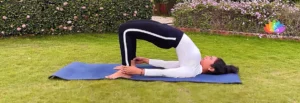
Banner Setubandhasana
Setubandhasana (Bridge Pose)

Bridge — activates the spine and hips as preparation.

Step by Step

How to Do Pawanmuktasana — Step-by-Step Instructions

Stage 1 — Ardha Pawanmuktasana (Right Leg)

  1. Lie on your back in Savasana. Legs extended, arms beside the body, palms down.
  2. Inhale. On the exhale, bend the right knee and draw it toward the right side of the chest.
  3. Interlace the fingers just below the right knee or around the right shin.
  4. On the next exhale, gently hug the knee closer — the right thigh presses the lower right abdomen.
  5. On the exhale, lift the head and bring the chin toward the right knee (if the neck allows).
  6. Breathe deeply. On each exhale, increase the hug gently. On each inhale, soften the grip.
  7. Hold for 5 to 10 breaths. On an exhale, lower the head and extend the right leg back to the floor.

Stage 2 — Ardha Pawanmuktasana (Left Leg)

  1. Repeat all steps of Stage 1 with the left leg. Equal duration on both sides.

Stage 3 — Purna Pawanmuktasana (Both Legs)

  1. On an exhale, draw both knees simultaneously into the chest.
  2. Wrap both arms around the shins or interlock the fingers around both knees.
  3. On the exhale, lift the head and bring the chin toward the knees.
  4. Rock gently side to side 3 to 5 times to massage the spine and release the back.
  5. Hold for 5 to 10 breaths. Lower the head and extend both legs on an exhale to finish.
Alignment Cues

Key Alignment Cues

  • The back of the body stays long and flat against the mat throughout the hold.
  • The extended leg is fully active — press the heel away, engage the quadriceps.
  • Shoulders stay relaxed on the mat — do not allow them to hunch toward the ears.
  • The grip on the knee is gentle, not white-knuckled — steady, not forced.
  • On every inhale, the grip softens; on every exhale, it deepens — this is the rhythm.
  • The chin moves toward the knee on the exhale — never force the head up with the hands.
  • The bent knee tracks toward the armpit of the same side — not across the midline.
  • The tailbone stays grounded — do not allow the lower back to lift away from the floor.
  • Both hips remain level — in the single-leg form, the opposite hip does not rotate.
  • The breath is the tool — each exhale releases; the hold is passive between breaths.
Watch Out

Common Mistakes

Yanking the knee to chest

Hug gently — force creates lower back strain, not release.

Forgetting the extended leg

Keep the straight leg active — heel pressing away, quad engaged.

Tensing the shoulders

Shoulders stay flat and wide on the mat throughout the hold.

Lifting the head with force

Chin moves toward knee on exhale — never pull it with the hands.

Knee crossing the midline

Guide the knee toward the same-side armpit, not across the body.

Skipping the breath rhythm

The exhale-deepen, inhale-soften rhythm is the whole technique.

Lower back lifts off floor

Root the tailbone — if back lifts, reduce the depth of the hug.

Rushing between stages

Rest in Savasana for 3–5 breaths between each of the 3 stages.

Benefits

Benefits of Pawanmuktasana

Digestion and Gas Relief

  • Releases trapped intestinal gas
  • Relieves bloating and flatulence
  • Stimulates peristalsis
  • Massages abdominal organs

Lower Back and Hips

  • Decompresses the lumbar spine
  • Releases sacroiliac joint
  • Stretches glutes and piriformis
  • Eases lower back tightness

Apana Vayu and Energy

  • Purifies Apana Vayu (downward air)
  • Releases energy blockages
  • Activates Muladhara Chakra
  • Stimulates Svadhisthana Chakra

Circulation and Joints

  • Improves hip joint circulation
  • Reduces stiffness in the hips
  • Tones the pelvic floor muscles
  • Improves knee joint mobility

Therapeutic (Traditional)

  • Aids constipation relief
  • Supports IBS management
  • Eases menstrual cramps
  • Reduces acid reflux (gentle form)

Mind and Nervous System

  • Calms the nervous system
  • Reduces stress and anxiety
  • Promotes Pratyahara (withdrawal)
  • Prepares body for Savasana
Variations

Pawanmuktasana Variations to Consider

Ardha Pawanmuktasana Single-leg form — always practised before the double-leg.
Purna Pawanmuktasana Both knees hugged simultaneously — full wind-release form.
Pawanmuktasana with Head Lift Chin brought toward the knee on exhale — adds neck stretch.
Rocking Pawanmuktasana Gentle side-to-side rocking — massages the entire spine.
Dynamic Pawanmuktasana Knee draws in on exhale, releases on inhale — rhythmic form.
Chair Pawanmuktasana Seated in chair, one knee lifted to chest — for seniors.
Supta Baddha Konasana Variation Knees wide instead of together — opens the inner groin.
Pawanmuktasana with Rotation Knees circle after hugging — releases the hip joints further.
After the Pose

Counter Poses for Pawanmuktasana — Wind Relieving Pose 

Always neutralise the spine after any backbend. Practice one or two of these counter poses immediately after Pawanmuktasana — Wind Relieving Pose :

Savasana (Corpse Pose) The primary counter; taken for 5–10 breaths after all three stages.
Tadasana (Mountain Pose) Supine extension neutralises the spinal flexion fully.
Sarvangasana (Shoulderstand) Bridge gently counters the hip compression.
Avoid If

Who Should Avoid This Pose

  • Acute lower back pain or disc herniation — spinal flexion aggravates these.
  • High blood pressure (uncontrolled) — head lift and breath compression spike BP.
  • Heart disease or recent cardiac event — abdominal compression loads the heart.
  • Hernia (abdominal or inguinal) — abdominal compression worsens hernia conditions.
  • Hyperacidity or active acid reflux — abdominal pressure pushes acid upward.
  • Recent abdominal surgery — the knee-to-chest compression stresses incisions.
  • Testicular disorders — the abdominal pressure is directly contraindicated.
  • Neck injury or cervical disc herniation — avoid the head-lift chin variation.
  • Severe haemorrhoids — the pelvic pressure may worsen the condition.
  • Pregnancy — from the second trimester onward; abdominal compression is unsafe.
  • Menstruation — abdominal compression is physiologically counterproductive.
Therapeutic Uses

Ailments That May Benefit from Pawanmuktasana — Wind Relieving Pose 

  • Constipation — abdominal compression stimulates peristalsis and aids bowel movement.
  • Trapped gas and flatulence — the defining therapeutic purpose of this pose.
  • Irritable Bowel Syndrome (IBS) — gentle abdominal massage soothes intestinal spasm.
  • Chronic lower back pain — lumbar decompression and sacral release reduce tension.
  • Mild sciatica — gentle piriformis and outer hip stretch reduces nerve compression.
  • Menstrual cramps — pelvic organ stimulation and parasympathetic calming ease cramping.
  • Mild arthritis of the hips and knees — gentle joint mobilisation improves synovial flow.
  • Mild anxiety and insomnia — the calming, inward quality activates the parasympathetic system.
  • Acid reflux (mild) — the parasympathetic response and relaxation reduce stress-related reflux.
FAQ

Frequently Asked Questions

What does Pawanmuktasana mean in Sanskrit?

Three words: Pawan (wind / Apana Vayu), Mukta (liberation / release), Asana (posture). Together: the posture that liberates trapped wind and energy blockages. 

What is the Pawanmuktasana Series?

A system of 30+ therapeutic exercises codified by Swami Satyananda Saraswati of the Bihar School. Three groups: anti-rheumatic, digestive, and Shakti Bandha. 

What is the correct sequence for Pawanmuktasana?

Always: right leg first → left leg → both legs together. This sequence aligns with Ayurvedic digestive energy flow and is non-negotiable in classical teaching. 

Can Pawanmuktasana help with constipation?

Yes. The abdominal compression in the double-leg form directly stimulates peristalsis and massages the ascending and descending colon, aiding bowel movement. 

What chakras does Pawanmuktasana activate?

Muladhara (Root) through pelvic floor grounding. Svadhisthana (Sacral) via pelvic organ stimulation. Manipura (Solar Plexus) through abdominal organ compression. 

Is Pawanmuktasana safe for beginners?

Yes — it is one of the gentlest and most accessible supine poses. Always begin with the single-leg Ardha form and build to the full double-leg version gradually. 

What is the difference between Pawanmuktasana and Apanasana?

Apanasana is a simpler passive knees-to-chest hold. Pawanmuktasana adds the chin-to-knee head lift, the three-stage sequence, and the rhythmic breath grip-and-release.

How many rounds of Pawanmuktasana should I practise?

Standard: 3 rounds of the full three-stage sequence. Hold each stage for 5–10 breaths. Rest in Savasana for 3–5 breaths between stages and rounds. 

✕

Login to Like

Please login with social account to support this post.

[nextend_social_login]

Find Your Videos

Choose a category