
- Lie face-down on your mat. Extend both legs, arms alongside the body, palms up.
- Rest the chin lightly on the floor. Take 2–3 deep breaths to soften the back.
- Bend both knees and bring the heels toward the buttocks simultaneously.
- Reach both arms back and grasp the outer ankle of each foot firmly.
- If you cannot reach, loop a strap around both ankles and hold the strap.
- Keep the knees hip-width apart throughout — do not allow them to splay wider.
- On an inhale, kick both feet firmly into the hands to initiate the lift.
- Simultaneously lift the chest, chin, and thighs off the floor in one action.
- The lift is generated by the feet pressing back — not by the arms pulling forward.
- Broaden the chest and roll the shoulders back away from the ears.
- Gaze forward and slightly upward — chin parallel to the floor, not sharply raised.
- Breathe slowly and freely. Hold for 5 to 10 breaths or 20–30 seconds.
- Exhale and release slowly — lower the chest and legs together to the mat.
- Rest in Makarasana for 6–8 breaths between rounds. Practise 2–3 rounds total.
Dhanurasana (Dhanurasana (Bow Pose))
Sanskrit: धनुरासन · Pronunciation: dha-noo-RAH-sah-nah · Chakras: Manipura, Anahata, Svadhisthana
This page is your complete reference for practising Dhanurasana (Bow Pose) — one of the 32 asanas of the Gheranda Samhita and a cornerstone prone backbend in every yoga lineage. Learn its classical roots, step-by-step technique, precise alignment cues, dynamic rocking variations, therapeutic benefits for the spine and digestion, and all contraindications for safe practice.
Overview
What Is Dhanurasana?
Dhanurasana — Bow Pose — is a foundational prone backbend in which the practitioner lies face-down, bends both knees, grasps the ankles, and lifts the chest and thighs simultaneously to form the shape of a drawn bow. The torso and legs are the bow’s arc; the arms are its string. Documented in the Hatha Yoga Pradipika, Gheranda Samhita, and the 1905 Yogasopana Purvacatuska, it is one of yoga’s most historically verified postures.
Sanskrit Name
Dhanurasana (धनुरासन)
Meaning
Bow Posture
Pose Type
Prone Backbend, Chest Opener
Strengthens
Back, Glutes, Core
Also Known As
Bow Pose, Full Bow Pose
Chakras Activated
Manipura, Anahata, Svadhisthana
Stretches
Chest, Spine, Hip Flexors, Abdomen
Pronunciation
dha-noo-RAH-sah-nah
Warm Up First
Preparatory Poses
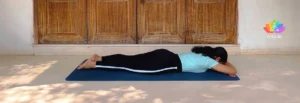
Makarasana
Prone relaxation — aligns the body before the backbend.
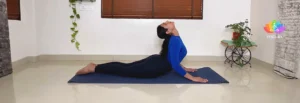
Bhujangasana
Cobra — warms the spinal extensors and opens the chest.
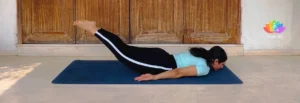
Shalabhasana
Locust — builds posterior chain strength for the full lift.

Ardha Dhanurasana
Half Bow — one leg only; builds the ankle-grasp technique.

Ustrasana
Camel — opens the thoracic spine for a deeper bow arch.

Supta Virasana
Reclining Hero — stretches the hip flexors and quads fully.

Setu Bandha Sarvangasana
Bridge — activates the same glutes and hamstrings.
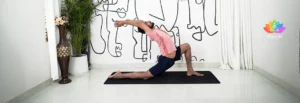
Anjaneyasana
Low Lunge — lengthens the hip flexors before the prone bend.
Step by Step
How to Do Dhanurasana — Step-by-Step Instructions
Alignment Cues
Key Alignment Cues
- Knees stay hip-width — the single most protective alignment cue in the pose.
- The lift is foot-driven — kick back into the hands; arms remain firm but passive.
- Tailbone lengthens toward the floor — prevents the lower back from over-crunching.
- Inner thighs rotate slightly inward — broadens the sacrum and protects the SI joint
- Shoulders roll back and down — away from the ears; chest opens forward and up.
- The gaze is forward — chin roughly parallel to the floor, neck long and free.
- Both sides of the body lift equally — check that neither thigh is higher than the other.
- Core draws in gently — supports the lumbar spine without restricting the breath.
- The ankles are grasped — not the tops of the feet; ankle grip keeps toes pointed.
- Breath remains free — if breath is restricted by the lift height, lower slightly.
Watch Out
Common Mistakes
Knees splaying wide
Keep knees hip-width — wider compresses the sacroiliac joint.
Pulling with the arms
Arms hold; feet kick back — this generates the correct lift.
Over-crunching lower back
Lengthen the tailbone down; lift from the sternum, not the lumbar.
Grasping the tops of feet
Hold the outer ankles — foot-top grip reduces ankle stability.
Chin jutting sharply up
Keep the chin parallel to the floor — the neck stays long and free.
Breath held during hold
Free breath is essential; holding signals the pose is too high.
One side higher than other
Check symmetry — both thighs and both shoulders lift equally.
Skipping the counter-pose
Always follow with a forward fold — the back muscles need release.
Benefits
Benefits of Dhanurasana
Spine and Back
- Strengthens erector spinae
- Improves spinal flexibility
- Reduces back stiffness
- Develops lumbar resilience
Chest and Posture
- Opens chest and heart space
- Counters kyphosis and rounding
- Strengthens posterior shoulders
- Improves overall body posture
Digestion and Organs
- Massages abdominal organs
- Stimulates digestive fire (Agni)
- Relieves constipation and gas
- Stimulates adrenal glands
Strength and Tone
- Tones glutes and hamstrings
- Strengthens hip flexors
- Builds core stability
- Tones arms and shoulders
Therapeutic (Traditional)
- Supports diabetes management
- Aids thyroid stimulation
- Eases menstrual discomfort
- Boosts metabolism and heat
Mind and Energy
- Activates Manipura Chakra
- Opens Anahata (Heart) Chakra
- Reduces fatigue and lethargy
- Builds confidence and vitality
Variations
Dhanurasana Variations to Consider
Ardha Dhanurasana Half Bow — one leg only; ideal entry for beginners.
Parsva Dhanurasana Side Bow — roll onto one side; enhances lateral flexibility.
Dynamic / Rocking Bow Rock forward and back — massages abdomen; warms the spine.
Dhanurasana with Strap Strap around ankles — bridges the reach gap for tight students.
Purna Dhanurasana Full Bow — feet reach the head; extreme backbend, advanced only.
Urdhva Dhanurasana Wheel Pose — supine full arch; the standing-hands progression.
After the Pose
Counter Poses for Dhanurasana (Bow Pose)
Always neutralise the spine after any backbend. Practice one or two of these counter poses immediately after Dhanurasana (Bow Pose):
Avoid If
Who Should Avoid This Pose
- Acute lower back pain or disc herniation — backbend load is high.
- Hernia (abdominal or inguinal) — abdominal pressure worsens hernias.
- Peptic or stomach ulcers — abdominal compression is contraindicated.
- High blood pressure (uncontrolled) — prone position and effort spike BP.
- Heart disease or recent cardiac event — exertion demand is significant.
- Migraine or severe headache — increased cranial blood flow worsens pain.
- Neck injury or cervical spondylosis — the chin lift stresses the cervical spine.
- Severe knee injury — the knee bend under tension stresses the joint.
- Wrist injury or carpal tunnel syndrome — ankle grip causes wrist strain.
- Pregnancy — prone abdominal compression is absolutely contraindicated.
- Menstruation — abdominal compression and adrenal activation are inappropriate.
Therapeutic Uses
Ailments That May Benefit from Dhanurasana (Bow Pose)
- Chronic lower back pain — posterior chain strengthening supports the lumbar spine.
- Postural kyphosis — chest opening and thoracic extension directly counter forward rounding.
- Mild diabetes — abdominal organ stimulation and Agni activation support blood sugar (adjunct).
- Sluggish digestion and constipation — abdominal massage through prone compression aids motility.
- Mild asthma and shallow breathing — chest opening and thoracic expansion improve lung capacity.
- Menstrual irregularity and mild cramps — pelvic stimulation supports healthy cycles (avoid during).
- Fatigue and low energy — adrenal stimulation and Manipura activation counter lethargy.
- Mild thyroid imbalance — neck extension improves thyroid blood flow (traditional claim, adjunct only).
FAQ
Frequently Asked Questions
What is Dhanurasana?
A prone backbend where the body forms the shape of a drawn bow. Documented in the HYP (I.27), Gheranda Samhita, and Sritattvanidhi.
What is the classical description of Dhanurasana in the Hatha Yoga Pradipika?
HYP I.27 describes it as grasping the toes and pulling them to the ears like drawing a bow — a seated variant of the modern prone form.
What is the difference between Dhanurasana and Urdhva Dhanurasana?
Dhanurasana is a prone backbend balancing on the abdomen. Urdhva Dhanurasana (Wheel) is a supine backbend pressing up on hands and feet.
How many rounds of Dhanurasana should I practise?
Standard: 2–3 rounds per session. Hold each for 20–30 seconds. Rest in Makarasana for 6–8 breaths between every round without exception.
Which chakras does Dhanurasana activate?
Manipura (Solar Plexus) through abdominal compression. Anahata (Heart) through chest opening. Svadhisthana (Sacral) via pelvic stimulation.
What is Parsva Dhanurasana?
Side Bow — from full Dhanurasana, roll onto one side keeping the grip. Enhances lateral spine flexibility and stimulates digestion deeply.
Can Dhanurasana help with diabetes?
Abdominal organ stimulation, pancreatic massage, and Agni activation are supportive (traditional claim). Always as adjunct to medical care.
Why do I feel lower back pain in Dhanurasana?
Usually the knees are too wide or the lift is too high. Narrow the knees to hip-width, lower the height, and kick the feet back rather than pulling.