The Sanskrit name is derived from Chatur (चतुर) meaning four, Anga (अङ्ग) meaning limb, Danda (दण्डा) meaning staff/stick and asana (आसन) meaning posture or seat.
The Sanskrit name is derived from Chatur (चतुर) meaning four, Anga (अङ्ग) meaning limb, Danda (दण्डा) meaning staff/stick and asana (आसन) meaning posture or seat.
Steps to perform the Asana: Chaturanga Dandasana
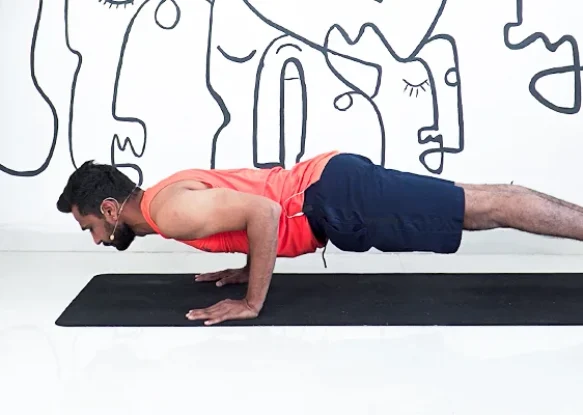
Come into Adho Mukha Svanasana position. The gap between the arms should be equal to shoulder width. Ensure at least a 30 cm gap between the big toes.
Bend the elbows and lower the body so that the chin, knees and chest should touch the floor. Exhale while lowering the body. Now the body should be straight.
Inhale and lift the chin, knees, and chest.
No part of the body should touch the floor except your palms and toes.
Do not hang on your belly. Shoulder blades should not come out.
The muscles of the upper arms and stomach should be tightened to keep the back straight.
Keep this final position as long as it is convenient and keep breathing normally.
To release the pose, exhale and bring the body down to the floor.
Key Alignment Points
Common Misalignments / (Mistakes)
Shoulders drooping lower than elbow height.
Hunched shoulders
Uneven hands.
Arching or bowing your head.
Sinking hips or lifting your buttocks.
Lowering more than 90 degrees.
Contraindication / Cautions
Avoid in case of an injury in the back, shoulder, or hand.
Avoid in case you are suffering from wrist, elbow, shoulder, or lower back pain.
Avoid if you are suffering from Carpal Tunnel Syndrome.
Avoid if suffering from high blood pressure.
Pregnant women or beginners to do this yoga only under the guidance of a Yoga teacher.