Home > Zazen Meditation

Zazen Meditation

Zazen Meditation | Yoga.in

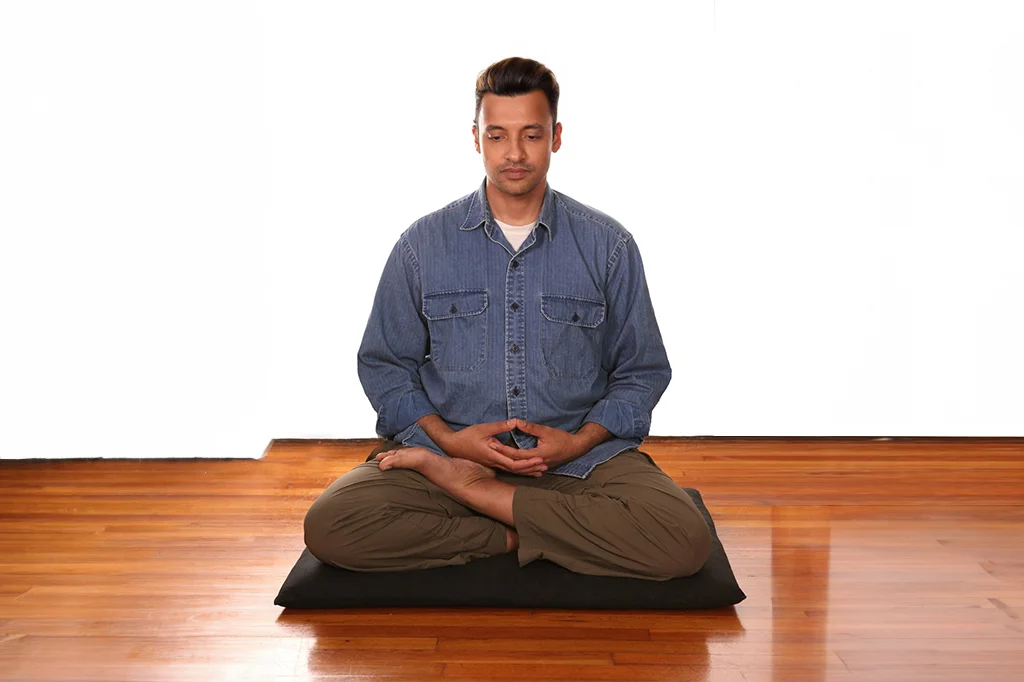
Meditation comes in various forms, providing a chance to find stillness and create peace in your life. Zazen is one such method, offering both outward and inward guidance on how to be fully present in the current moment without interpretation. It’s about being awake yet letting go, experiencing the now without getting caught up in thoughts or stories.
In Zen Buddhism, zazen takes a central role in meditation. It’s often combined with study and teaching to enhance clarity in practice. Zazen involves specific techniques, like counting breaths, to concentrate your attention and strengthen your focus. It’s a simple method to bring peace to your mind and embrace the beauty of the present.

Philosophy of Vipassana Meditation

Vipassana is based on the fundamental Buddhist principles of impermanence (anicca), suffering or unhappiness(dukkha), and the nonself nature of all phenomena (anatta). The technique aims to liberate practitioners from the cycle of craving and aversion by developing deep insight into the nature of their minds and the impermanent nature of all experiences. 

The Art of Yoga Practice

Preparation

Find a quiet and comfortable meditation space. 

Assume a stable posture, often sitting cross-legged or on a chair, with a straight spine and relaxed shoulders. 

Anapana Meditation

Begin with the practice of Anapana, focusing on the natural breath. 

Direct attention to the breath at the nostrils or the rising and falling of the abdomen. 

Refrain from controlling the breath; simply observe its natural rhythm.

Body Scan

After a period of Anapana meditation, transition to Vipassana by scanning the body systematically. 

Pay meticulous attention to sensations, starting from the top of the head and moving down to the toes. 

 Observe sensations objectively without attachment or aversion. 

Equanimity

Cultivate equanimity by observing sensations without reacting to them. This is a key aspect of Vipassana. 

Recognize that sensations, whether pleasant or unpleasant, are temporary and subject to change. 

Impermanence and Insight

Observe the impermanence of sensations, understanding that they arise and pass away. 

Develop insight into the nature of mind and matter, realising the interconnectedness of mental and physical phenomena.

Noble Silence

Maintain “Noble Silence” during the course, minimising verbal and nonverbal communication to deepen introspection. 

The silence helps practitioners turn their attention inward, fostering a more profound meditative experience. 

Daily Schedule

Vipassana meditation often involves residential courses lasting ten days, following a rigorous schedule of meditation, breaks, and discourses. 

The intensive nature of the retreat allows for a deep dive into the practice and the purification of the mind. 

Conclusion

In the Zazen meditation, commitment, discipline, and patience are the guiding companions. The rhythm of this regular practice unfolds gradually, urging practitioners to commence with dedication—ideally, in the early morning—for a modest 10 to 15 minutes. Over time, as the roots of discipline deepen, the duration expands, beckoning individuals to embrace moments of stillness for 30 minutes or more. Zazen, a pathway of self-discovery, rewards those who tread it with steadfast commitment, leading to a tranquil sanctuary within. 

✕

Login to Like

Please login with social account to support this post.

[nextend_social_login]

Find Your Videos

Choose a category